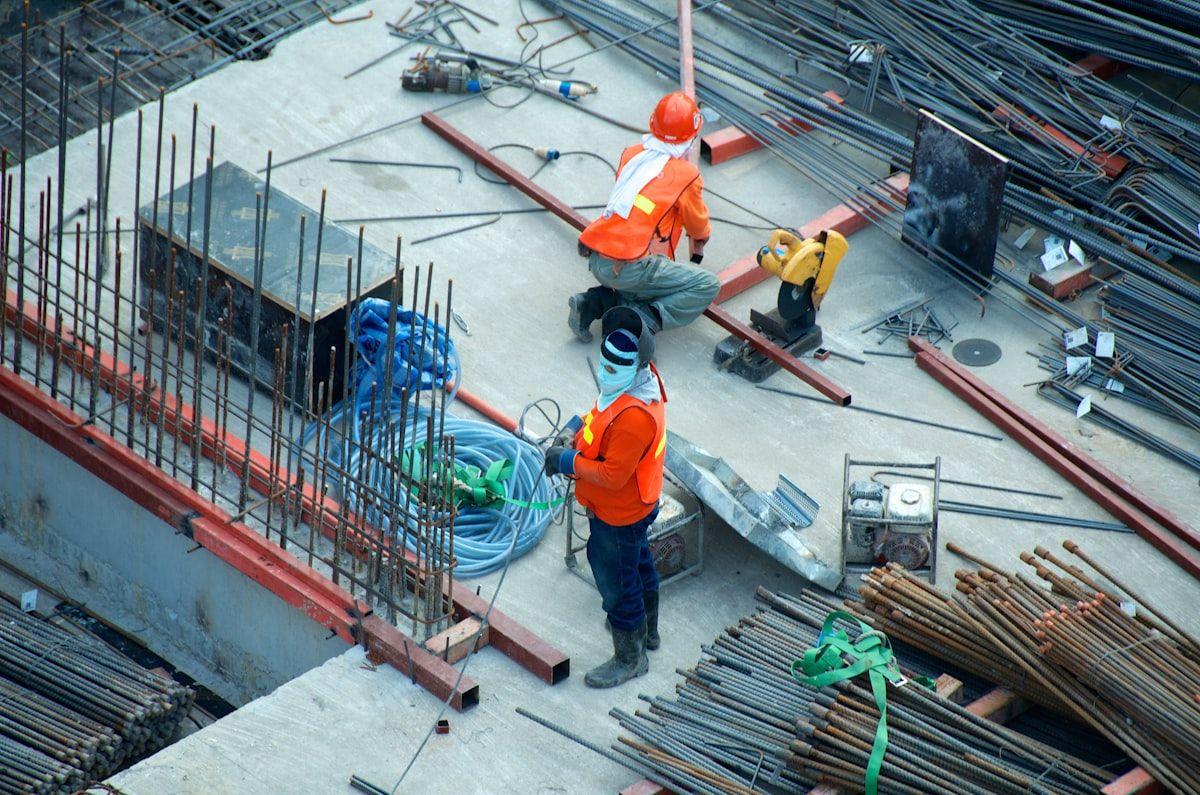
You're under a crawlspace. Your phone rings. You can't answer it.
By the time you're out and cleaned up, it's been 20 minutes. No voicemail. You chalk it up and move on.
Meanwhile, that caller had already tried two other companies. You were third on the list because you had the best Google reviews. Now they're booked with number four — someone who answered, or at least texted back fast.
This happens to contractors every single day. And most don't know how to stop missing calls as a contractor, let alone how much it's costing them. The math is quietly brutal.
The Missed Call Cycle
Let's run through what actually happens when a call goes unanswered.
A homeowner needs an HVAC tech, a plumber, a roofer — doesn't matter. They Google the trade, see 3–5 options, and start dialing. They're not loyal to anyone yet. They just want someone who can help them today.
Your phone rings. You're on a job, you're talking to a supplier, you're handling an invoice dispute — whatever. The call goes to voicemail.
Most of them hang up. Research consistently shows that upward of 80% of callers don't leave voicemails anymore. They just move to the next name on the list. The ones who do leave a voicemail expect a callback in under five minutes — not because they're demanding, but because that's how the internet has trained us to expect things to work. If you don't call back within five minutes, your chance of actually reaching them drops by more than half.
By 6pm when you finally listen to messages, that job has already been given to someone else.
Now multiply that by reality: most contractors doing $150K–$500K/yr miss somewhere between three and seven inbound calls per week. Even at the conservative end — five missed calls per week at a $400 average job value — that's $104,000 per year in leads that came in and walked back out.
That's not exaggerating. That's the math.
Why Voicemail Doesn't Fix It
The reflex solution is to set up a better voicemail message. More professional, clearer, maybe a callback guarantee.
It won't work, and here's why: the problem isn't the voicemail. The problem is the gap between the missed call and the follow-up.
Even if a caller leaves a message, the window to convert them is narrow. Studies on lead response time consistently show that the odds of reaching a lead and qualifying them drop dramatically after the five-minute mark. At 30 minutes, you're already fighting to hold their attention. At a few hours, they've moved on.
Voicemail slows down the response, not speeds it up. By the time you batch-listen to messages at the end of the day, you've already missed the window on every one of them.
Why Hiring a Receptionist Doesn't Fix It (For Most Contractors)
The next reflex: hire someone to answer the phones.
A full-time receptionist runs $35,000–$50,000 per year before benefits. That pencils out when you're doing $600K+ and the volume justifies the headcount. Below that, you're paying a salary to solve a process problem, and that's the wrong order of operations.
Part-time answering services have a different problem — they don't know your business well enough to actually help the caller. They can take a name and number, but they can't schedule a job, answer questions about your service area, or give a ballpark on pricing. So the caller still leaves uncertain, and you still have to play phone tag.
The real issue isn't a staffing problem. It's a process problem. You need a system that fires automatically the moment a call goes unanswered — one that doesn't need a salary, doesn't take days off, and doesn't put a caller on hold.
What Actually Works: Missed Call Text-Back
Here's what changes the game: when a call goes unanswered, an automated text fires back to the caller within 60 seconds.
The message is simple — something like: "Hey, this is [Your Business Name]. Sorry we missed you — what can we help with?"
That's it. Short, human, specific. It opens a two-way SMS conversation before the caller has even made it to the next business on their list.
This isn't a chatbot. It's a real number they can text back. The conversation is logged and you (or whoever handles messages) can respond from a laptop, a tablet, or your phone between jobs. Most of the time, the customer replies within a few minutes. Often, you can book the job right there in text.
The psychology makes sense: a text is less intrusive than a phone call, easier to respond to in a short break, and feels personal even though it's automated. Callers who would never leave a voicemail will often text back right away.
What the Full System Looks Like
Missed call text-back is the first piece. A complete front-end capture system has a few more:
Lead form auto-reply. When someone submits your contact form, the same 60-second rule applies. An automatic acknowledgment goes out immediately — they hear from you before they've even closed the browser tab.
CRM entry on every inbound contact. Every call, every form submission, every text conversation gets logged automatically. Nothing falls through a gap because you forgot to write it down.
Follow-up sequence for non-bookings. If a lead comes in but no appointment is booked within 24 hours, an automated follow-up triggers. Not aggressive — just a single message checking in. This recovers a meaningful percentage of leads that would otherwise go cold.
Together, these mean every person who tries to reach you gets an immediate response, every lead is tracked, and nobody falls out of the system because you were too busy to follow up manually.
How to Set This Up
Most contractors are leaking tens of thousands of dollars a year and never see it on their P&L.
It’s not materials, labor, or marketing.
It’s missed calls.
Not the obvious ones you notice and return an hour later. The expensive ones are the calls that hit your voicemail, hang up, and go straight to the next contractor on Google — before you even know they existed.
The Hidden Revenue Leak in Your Phone
When a homeowner needs help, they don’t fill out a form and wait patiently.
They:
- Search “electrician near me” or “roof repair [city]”
- Open 2–5 options
- Start calling down the list
If you don’t answer, they don’t leave a message and wait. They hang up and tap the next number.
Research on lead response shows:
- Your odds of reaching a lead drop by 10x if you wait more than 5 minutes to respond.
- By the time you call back an hour later, there’s a good chance they’ve already booked someone else.
This isn’t about your craftsmanship or reputation. It’s a timing problem.
Keep Reading
Your Customers Would Leave Reviews — If You Made It Easy Enough
You're Not Losing Estimates to Price — You're Losing Them to Silence
Npire Builders
Ready to put this into practice?
We install the systems — CRM, automations, follow-up sequences — that fix the gaps described in this article. No agency retainers, no long-term contracts.
Get my free Lead Leak Check →Nicole Surratt
All posts by Nicole →Founder, Npire Builders
Nicole started Npire Builders after watching talented contractors lose work they deserved — not because of their skills, but because the back end of their business was a mess. She builds systems that get contractors out of the chaos and into a business that runs without them holding it together at all times.